


Stories for climate adaptation and lessons from Logroño
Publicatons
By Eva Boon
08 / 09 / 2026
This summer, two articles we contributed to were published in the journal Climate Services. Both articles are the result of our work on the European project REACHOUT. The first article looks at how stories can be used to encourage climate adaptation. The second article presents a case study of the Spanish municipality of Logroño. It shows how a city can become more climate resilient through knowledge exchange. Read more about both below.
Go to the publications:

Using stories for climate adaptation
The article Co-producing climate stories as climate services for adaptation shows how climate stories were developed together with users, and what value they offer as a climate service in six European cities. The development process had three steps:
- Explore the setup and content together
- Develop the stories together
- Share and evaluate the stories together
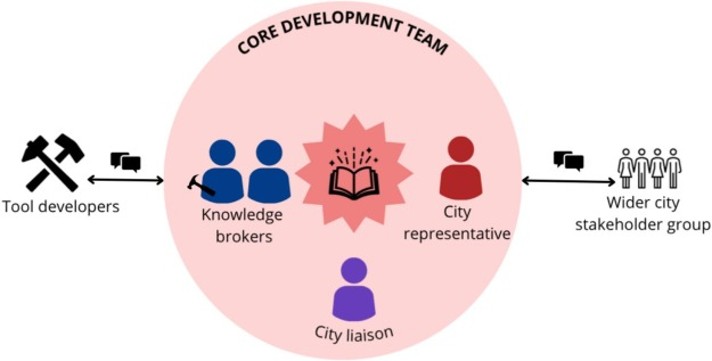
What did this process of co-creating climate stories achieve?
The authors also studied how this approach affected the stories and their usefulness for climate adaptation. Here are some key findings and recommendations:
- Clear purpose: a climate story works better when you decide its focus in advance.
- Create an early draft narrative: this helps participants engage fully and builds understanding among everyone involved.
- Focus on local relatability: people need to see themselves in the story. Use familiar places, everyday experiences from city life, plain language, and characters who resemble real residents. Only then will people actually use the story.
- Stories for bridging municipal silos: municipalities can use the development of a climate story to bring staff from different departments together. For example, people working on climate adaptation alongside colleagues from communications, geographic information systems, spatial planning, and water management.
- Align internally first, then engage residents: municipalities probably need to align internally before they can share climate stories widely with residents. The stories were mainly meant to involve residents, but few residents took part in the early stages. A logical next step is to strengthen internal knowledge and ownership first, and only then involve residents more actively.
Lessons from Logroño
How can you make cities more resilient to the effects of climate change? This only works if you turn knowledge about climate impacts in these cities into usable and accessible climate services, together with local partners. The article Enhancing climate resilience through knowledge brokerage: A case study of Logroño, Spain offers a practical example of climate adaptation in the Spanish municipality of Logroño. This municipality was one of the ‘city hubs’ in the REACHOUT project.
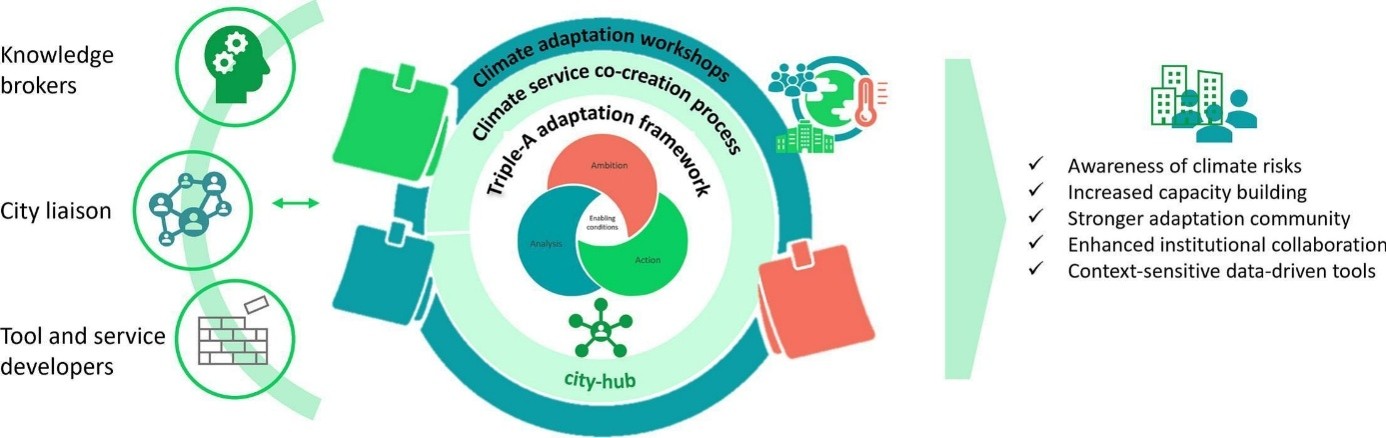
The Logroño example shows what happens when you develop climate services with a municipality over several years, rather than simply developing them for it. The article sets out the main lessons from this work. The research took place within the REACHOUT project, which used our Triple-A approach: first Analysis, then Ambition, then Action. These are the main findings of the research:
- Capacity building is likely to be more effective when embedded in a long-term, iterative learning framework: this means building knowledge and skills may work better over the long term, whereby people gain experience step by step. The Triple-A approach shows that this works well. In future, we can better combine training-modules, peer-learning networks, and mentorship programs. This helps organisations keep developing.
- Co-creation processes may be more equitable when designed to actively include diverse stakeholder perspectives: working together may provide better results when different groups take part. The project’s workshops showed that this works well. It’s important not just to involve many people. Actively include diverse stakeholder perspectives to stimulate a more equitable co-creation process. And take proactive measures to empower marginalised voices, such as community-based organisations, vulnerable populations, and civil society actors.
- The institutionalization of knowledge brokerage could contribute to more sustained knowledge transfer: this means sharing climate knowledge may work better when dedicated staff are in charge of it. Until now, project staff had often filled this role in Logroño. Permanent municipal staff can connect climate knowledge, policy, and practice more effectively. They can translate technical information into workable plans and encourage collaboration.
- Co-designing climate services with end-users is key to improve their relevance and usability: this means climate services work better when end-users help shape them from the start. Ask them regularly for their opinion. Then check together whether the result fits their work.
Using stories for climate adaptation
The article Co-producing climate stories as climate services for adaptation shows how climate stories were developed together with users, and what value they offer as a climate service in six European cities. The development process had three steps:
- Explore the setup and content together
- Develop the stories together
- Share and evaluate the stories together
What did this process of co-creating climate stories achieve?
The authors also studied how this approach affected the stories and their usefulness for climate adaptation. Here are some key findings and recommendations:
- Clear purpose: a climate story works better when you decide its focus in advance.
- Create an early draft narrative: this helps participants engage fully and builds understanding among everyone involved.
- Focus on local relatability: people need to see themselves in the story. Use familiar places, everyday experiences from city life, plain language, and characters who resemble real residents. Only then will people actually use the story.
- Stories for bridging municipal silos: municipalities can use the development of a climate story to bring staff from different departments together. For example, people working on climate adaptation alongside colleagues from communications, geographic information systems, spatial planning, and water management.
- Align internally first, then engage residents: municipalities probably need to align internally before they can share climate stories widely with residents. The stories were mainly meant to involve residents, but few residents took part in the early stages. A logical next step is to strengthen internal knowledge and ownership first, and only then involve residents more actively.
Lessons from Logroño
How can you make cities more resilient to the effects of climate change? This only works if you turn knowledge about climate impacts in these cities into usable and accessible climate services, together with local partners. The article Enhancing climate resilience through knowledge brokerage: A case study of Logroño, Spain offers a practical example of climate adaptation in the Spanish municipality of Logroño. This municipality was one of the ‘city hubs’ in the REACHOUT project.
The Logroño example shows what happens when you develop climate services with a municipality over several years, rather than simply developing them for it. The article sets out the main lessons from this work. The research took place within the REACHOUT project, which used our Triple-A approach: first Analysis, then Ambition, then Action. These are the main findings of the research:
- Capacity building is likely to be more effective when embedded in a long-term, iterative learning framework: this means building knowledge and skills may work better over the long term, whereby people gain experience step by step. The Triple-A approach shows that this works well. In future, we can better combine training-modules, peer-learning networks, and mentorship programs. This helps organisations keep developing.
- Co-creation processes may be more equitable when designed to actively include diverse stakeholder perspectives: working together may provide better results when different groups take part. The project’s workshops showed that this works well. It’s important not just to involve many people. Actively include diverse stakeholder perspectives to stimulate a more equitable co-creation process. And take proactive measures to empower marginalised voices, such as community-based organisations, vulnerable populations, and civil society actors.
- The institutionalization of knowledge brokerage could contribute to more sustained knowledge transfer: this means sharing climate knowledge may work better when dedicated staff are in charge of it. Until now, project staff had often filled this role in Logroño. Permanent municipal staff can connect climate knowledge, policy, and practice more effectively. They can translate technical information into workable plans and encourage collaboration.
- Co-designing climate services with end-users is key to improve their relevance and usability: this means climate services work better when end-users help shape them from the start. Ask them regularly for their opinion. Then check together whether the result fits their work.