MoutAInWater: understanding mountain water for climate adaptation

We analyse how local stakeholders can adapt to changing water availability from mountain ranges.

Customer
Location
Duration
Read more
Schmidt Sciences
Worldwide
2026-2031

MoutAInWater: understanding mountain water for climate adaptation

We analyse how local stakeholders can adapt to changing water availability from mountain ranges.

Customer
Location
Duration
Read more
Schmidt Sciences
Worldwide
2026-2031

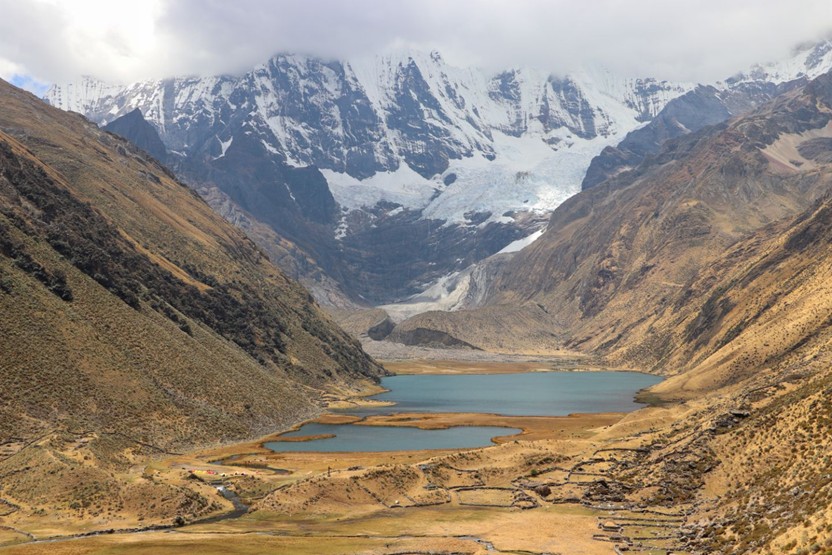
Around one-third of the world’s population depends on water from mountain ranges. This dependence is growing due to population growth and increasing water demand, while these regions are strongly affected by climate change. Glaciers are melting rapidly and precipitation patterns are shifting. As a result, water supply downstream is becoming less predictable, affecting drinking water, agriculture, and energy production.

Lisette Klok knows everything about this project
What is the project about?

Led by the Institute of Science and Technology (ISTA), we work together with international partners on the first global analysis of the water cycle in mountain regions. The project combines field measurements, detailed models, and AI to better understand how this water cycle is changing. It identifies where tipping points may occur: moments when snow, glaciers, and permafrost change so much due to climate change that water availability changes permanently and irreversibly. The project also shows which regions are especially vulnerable to water shortages.

What is the goal of the project?

The goal of the project is to better understand which tipping points and irreversible changes may occur in mountain regions, and what these changes mean for water availability downstream. We also develop adaptation strategies that help local stakeholders deal with these changes.

What is our role?

Our role in this project is to translate the knowledge developed in the research into practical action. We do this by identifying relevant stakeholders and working together with them to explore possible adaptation strategies. For this, we use the Triple-A Framework: Analysis, Ambition, Action.

What is the project about?

Led by the Institute of Science and Technology (ISTA), we work together with international partners on the first global analysis of the water cycle in mountain regions. The project combines field measurements, detailed models, and AI to better understand how this water cycle is changing. It identifies where tipping points may occur: moments when snow, glaciers, and permafrost change so much due to climate change that water availability changes permanently and irreversibly. The project also shows which regions are especially vulnerable to water shortages.

What is the goal of the project?

The goal of the project is to better understand which tipping points and irreversible changes may occur in mountain regions, and what these changes mean for water availability downstream. We also develop adaptation strategies that help local stakeholders deal with these changes.

What is our role?

Our role in this project is to translate the knowledge developed in the research into practical action. We do this by identifying relevant stakeholders and working together with them to explore possible adaptation strategies. For this, we use the Triple-A Framework: Analysis, Ambition, Action.

Share: