


Climate Story ‘When the AMOC tips’
We show what could happen if the AMOC shuts down
Customer
Location
Duration
Read more
Climate Story ‘When the AMOC tips’
We show what could happen if the AMOC shuts down
Customer
Location
Duration
Read more
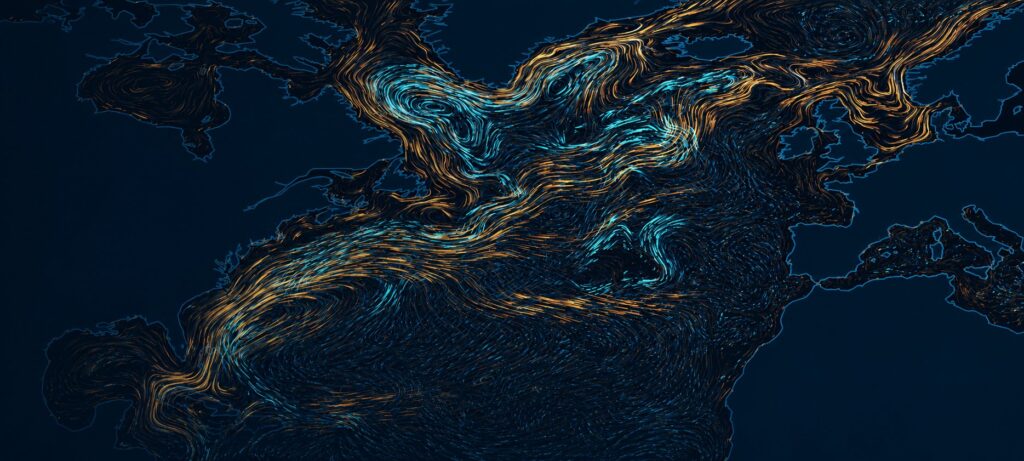
The Netherlands has a mild maritime climate, with fairly mild winters and cool summers. This is largely because a system of ocean currents carries warm water to north-west Europe and transports cold water back south. This system is called the AMOC, which stands for Atlantic Meridional Overturning Circulation. But what if this system shuts down because of climate change?
The story When the AMOC tips explores what a shutdown of the system could mean for the Netherlands and western Europe. It also gives a first overview of the steps that adaptation professionals can take right now.
What is the AMOC?
The AMOC is the system of ocean currents that carries warm water to north-west Europe and transports cold water back south. Climate change is slowing down this system of currents in the Atlantic Ocean. This affects the Gulf Stream, the part of the AMOC that gives us our mild climate. The KNMI’23 climate scenarios assume that the AMOC will slow down by 34 to 45 percent this century. But there is also a chance that the system passes a tipping point and shuts down almost completely.
What happens if the AMOC shuts down?
If the AMOC shuts down, the climate in north-west Europe will change dramatically. Instead of our continent warming up further, temperatures in autumn and winter will fall. Winters will become much colder, with possible extremes down to -20 °C. Our climate will then have a much shorter growing season, which will create major challenges for farming. At the same time, summers will become drier and more barren. On top of that, the sea level along the Dutch coast will rise even further.
What is the aim of the story?
The story ‘When the AMOC tips’ is meant for everyone whose work involves climate change and climate adaptation. This includes policymakers and advisers at municipalities, provinces, water authorities and the national government, and professionals at consultancies and knowledge institutes. The aim is to make them more aware of the risks of a tipping AMOC. At the same time, we have done our best to make the story accessible and interesting for a wide audience.
What will you find in this story?
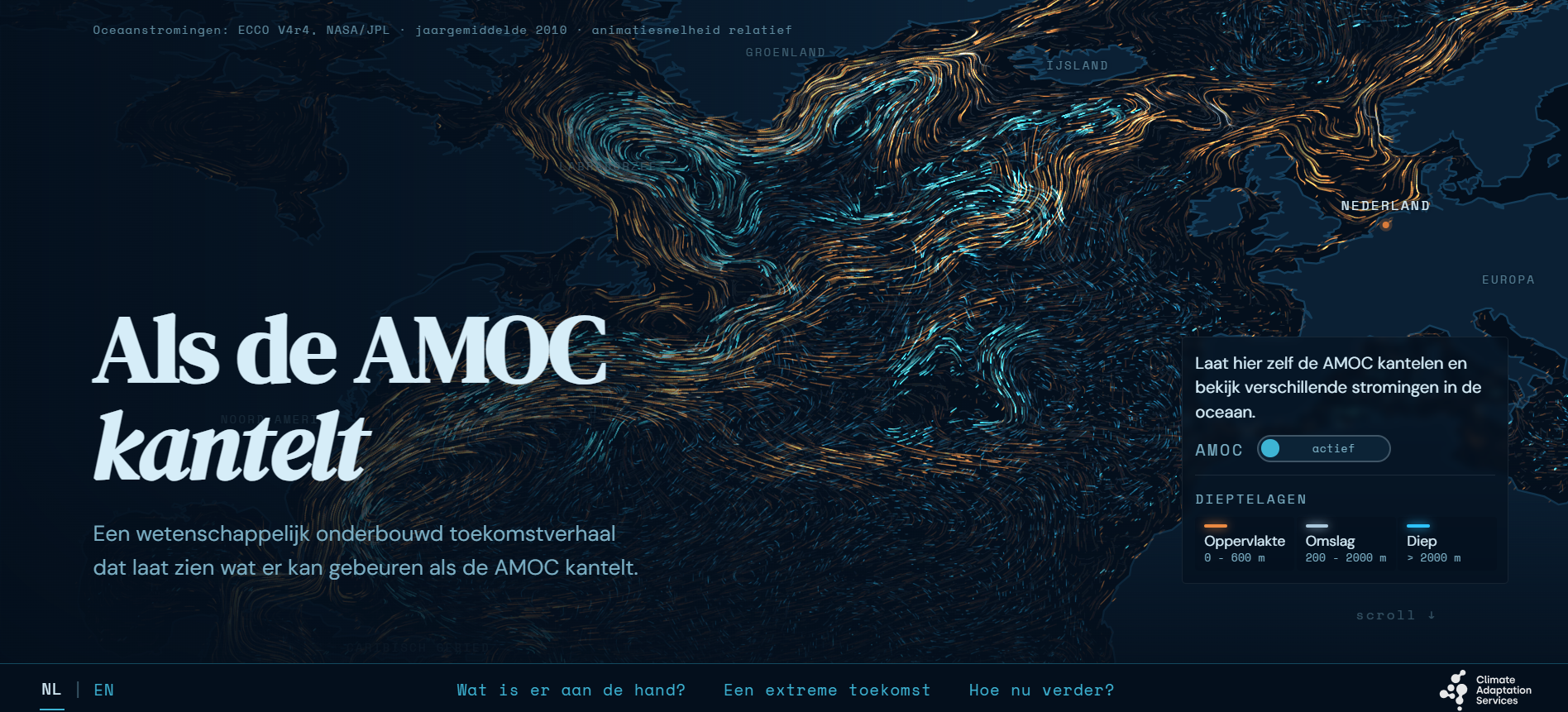
‘When the AMOC tips’ is a science-based story that explores the possible effects of an AMOC that shuts down. The story shows what could happen between 2026 and 2126 in the worst case: the AMOC reaches a tipping point within the next few years. You can also read what this could mean for climate adaptation in the Netherlands, and what you as a professional can do with this knowledge. The story consists of accessible texts and attractive visualisations. For example, you can make the AMOC tip yourself in an interactive animation. And a bubble diagram about cold helps you think about what extra cold means for your work, your sector or your surroundings.
How did we create this story?
Rosette Raterman developed the story during her internship, in collaboration with experts, including Dr René van Westen (Utrecht University) and Prof. Dr Caroline Katsman (TU Delft and KNMI).
Go to the story: When the AMOC tips