


Climate adaptation in the Caribbean part of the Kingdom
We work together to make the Caribbean islands more resilient to the effects climate change
Customer
Location
Duration
Read more
IPDC, the Ministry of Infrastructure and Water Management
Caribbean part of the Dutch Kingdom
2024-present
Climate adaptation in the Caribbean part of the Kingdom
We work together to make the Caribbean islands more resilient to the effects climate change
Customer
Location
Duration
Read more
IPDC, the Ministry of Infrastructure and Water Management
Caribbean part of the Dutch Kingdom
2024-present

Since 2024, we have worked on climate adaptation in the Caribbean part of the Kingdom of the Netherlands. We support the islands in developing climate plans, strengthen knowledge about climate adaptation, and improve cooperation between the islands and partners in the European Netherlands. We do this, among other ways, through the International Panel on Deltas and Coastal Areas (IPDC), an initiative of the Ministry of Infrastructure and Water Management.

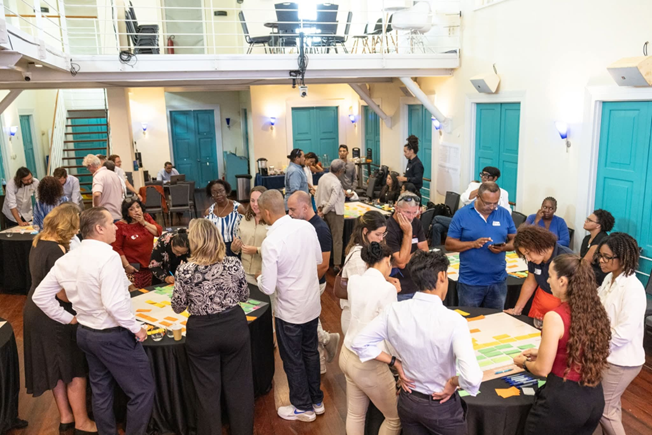
How we work through the IPDC
The IPDC helps deltas and coastal areas worldwide to take faster action on water management and climate adaptation. In the Caribbean part of the Kingdom, the IPDC focuses on supporting the islands in preparing adaptation plans and strategies. We play a coordinating role in this process. From Curaçao, our colleague Timo Kelder works as Dutch Caribbean Coordinator. He ensures coherence, continuity, and good coordination between the islands, knowledge institutes, and governments.
The countries Aruba, Curaçao, and Sint Maarten and the special municipalities Bonaire, Saba, and Sint Eustatius all take part in the IPDC. Each island has joined at a high political and administrative level and appointed a Focal Point. This Focal Point acts as the main contact for cooperation and coordination.
The local context comes first
The islands face major challenges such as hurricanes, sea level rise, flooding, drought, and extreme heat. The islands often know well what they need to protect themselves. At the same time, their capacity to take action is often limited. That is why we always connect our work to local needs and possibilities. Three principles guide our work.
- Ownership on the islands: We involve local governments, organisations, and experts from the start of each project or activity. We coordinate decisions that affect an island with its Focal Point. This way, the island keeps control.
- Inclusive approach: Climate adaptation affects the whole society. We pay attention to vulnerable groups and take local and traditional knowledge seriously. Local expertise is our starting point. Where needed, we add knowledge from the European Netherlands.
- Integrated and regional cooperation: We look at climate adaptation in connection with other challenges, such as nature, housing, agriculture, the economy, water availability, and safety. By sharing knowledge and experiences between the islands, they strengthen each other.
Developing knowledge and strategies
In recent years, we have strengthened knowledge on climate adaptation and supported policy in several ways. Below you can read how we did this:
We develop Climate Impact Atlasses
We developed a Climate Impact Atlas for all six islands. We created the atlases for Aruba, Curaçao, and Sint Maarten with funding from the IPDC. We developed the atlas for the BES islands on behalf of the Ministry of Infrastructure and Water Management. The atlases include maps, data, and clear explanations about climate risks. They also contain stories written by local authors about climate impacts and possible solutions. These stories raise awareness and show what islanders can do themselves to make their island more resilient.
The atlases help users build a shared understanding of the challenges. In the past, available data was limited, scattered, and difficult to understand. Now all available information and knowledge can be found in one central place. Curious to explore? Take a look at the atlases:
Climate Impact Atlas St. Martin
Climate Impact Atlas BES islands
We contribute to national climate adaptation strategies
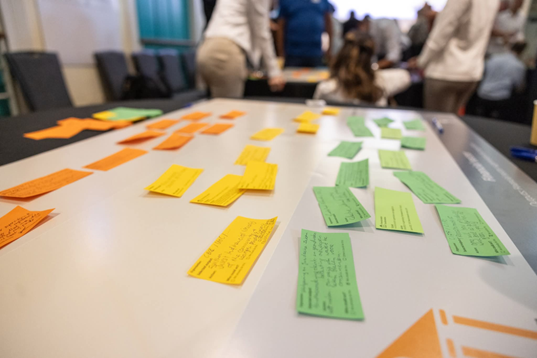
We also contribute to the development of National Climate Adaptation Strategies for Aruba, Curaçao, and Sint Maarten. We support participatory projects that allow different stakeholders to contribute. Together with the Focal Points of the islands, we have developed climate scenarios.
We developed an adaptation options database
We have also built a database with possible adaptation options, in close cooperation with the universities on the islands. The universities provided the knowledge. We built an accessible database and integrated it into the different Climate Impact Atlases.
We work together with the Netherlands Scientific Council for Government Policy
We work with the Netherlands Scientific Council for Government Policy (WRR) on a chapter about the state of climate adaptation in the Caribbean part of the Kingdom.
The Caribbean on the Climate Adaptation Knowledge Portal
On the Climate Adaptation Knowledge Portal, we added a Caribbean section with information about climate change and what the Caribbean islands can do to adapt to its impacts.
Long term commitment
Climate adaptation requires long term commitment. In recent years, we have built knowledge and encouraged cooperation. We have also worked hard to build trust between partners on the islands and in the European Netherlands. In the coming years, we will continue to strengthen these partnerships and further develop knowledge about climate and climate adaptation.
How we work through the IPDC
The IPDC helps deltas and coastal areas worldwide to take faster action on water management and climate adaptation. In the Caribbean part of the Kingdom, the IPDC focuses on supporting the islands in preparing adaptation plans and strategies. We play a coordinating role in this process. From Curaçao, our colleague Timo Kelder works as Dutch Caribbean Coordinator. He ensures coherence, continuity, and good coordination between the islands, knowledge institutes, and governments.
The countries Aruba, Curaçao, and Sint Maarten and the special municipalities Bonaire, Saba, and Sint Eustatius all take part in the IPDC. Each island has joined at a high political and administrative level and appointed a Focal Point. This Focal Point acts as the main contact for cooperation and coordination.
The local context comes first
The islands face major challenges such as hurricanes, sea level rise, flooding, drought, and extreme heat. The islands often know well what they need to protect themselves. At the same time, their capacity to take action is often limited. That is why we always connect our work to local needs and possibilities. Three principles guide our work.
- Ownership on the islands: We involve local governments, organisations, and experts from the start of each project or activity. We coordinate decisions that affect an island with its Focal Point. This way, the island keeps control.
- Inclusive approach: Climate adaptation affects the whole society. We pay attention to vulnerable groups and take local and traditional knowledge seriously. Local expertise is our starting point. Where needed, we add knowledge from the European Netherlands.
- Integrated and regional cooperation: We look at climate adaptation in connection with other challenges, such as nature, housing, agriculture, the economy, water availability, and safety. By sharing knowledge and experiences between the islands, they strengthen each other.
Developing knowledge and strategies
In recent years, we have strengthened knowledge on climate adaptation and supported policy in several ways. Below you can read how we did this:
We develop Climate Impact Atlasses
We developed a Climate Impact Atlas for all six islands. We created the atlases for Aruba, Curaçao, and Sint Maarten with funding from the IPDC. We developed the atlas for the BES islands on behalf of the Ministry of Infrastructure and Water Management. The atlases include maps, data, and clear explanations about climate risks. They also contain stories written by local authors about climate impacts and possible solutions. These stories raise awareness and show what islanders can do themselves to make their island more resilient.
The atlases help users build a shared understanding of the challenges. In the past, available data was limited, scattered, and difficult to understand. Now all available information and knowledge can be found in one central place. Curious to explore? Take a look at the atlases:
Climate Impact Atlas St. Martin
Climate Impact Atlas BES islands
We contribute to national climate adaptation strategies
We also contribute to the development of National Climate Adaptation Strategies for Aruba, Curaçao, and Sint Maarten. We support participatory projects that allow different stakeholders to contribute. Together with the Focal Points of the islands, we have developed climate scenarios.
We developed an adaptation options database
We have also built a database with possible adaptation options, in close cooperation with the universities on the islands. The universities provided the knowledge. We built an accessible database and integrated it into the different Climate Impact Atlases.
We work together with the Netherlands Scientific Council for Government Policy
We work with the Netherlands Scientific Council for Government Policy (WRR) on a chapter about the state of climate adaptation in the Caribbean part of the Kingdom.
The Caribbean on the Climate Adaptation Knowledge Portal
On the Climate Adaptation Knowledge Portal, we added a Caribbean section with information about climate change and what the Caribbean islands can do to adapt to its impacts.
Long term commitment
Climate adaptation requires long term commitment. In recent years, we have built knowledge and encouraged cooperation. We have also worked hard to build trust between partners on the islands and in the European Netherlands. In the coming years, we will continue to strengthen these partnerships and further develop knowledge about climate and climate adaptation.